
Working with Natural Light: A Photographer's Best Tool
Our techniques and approach to making the best use of Cappadocia's unique light.

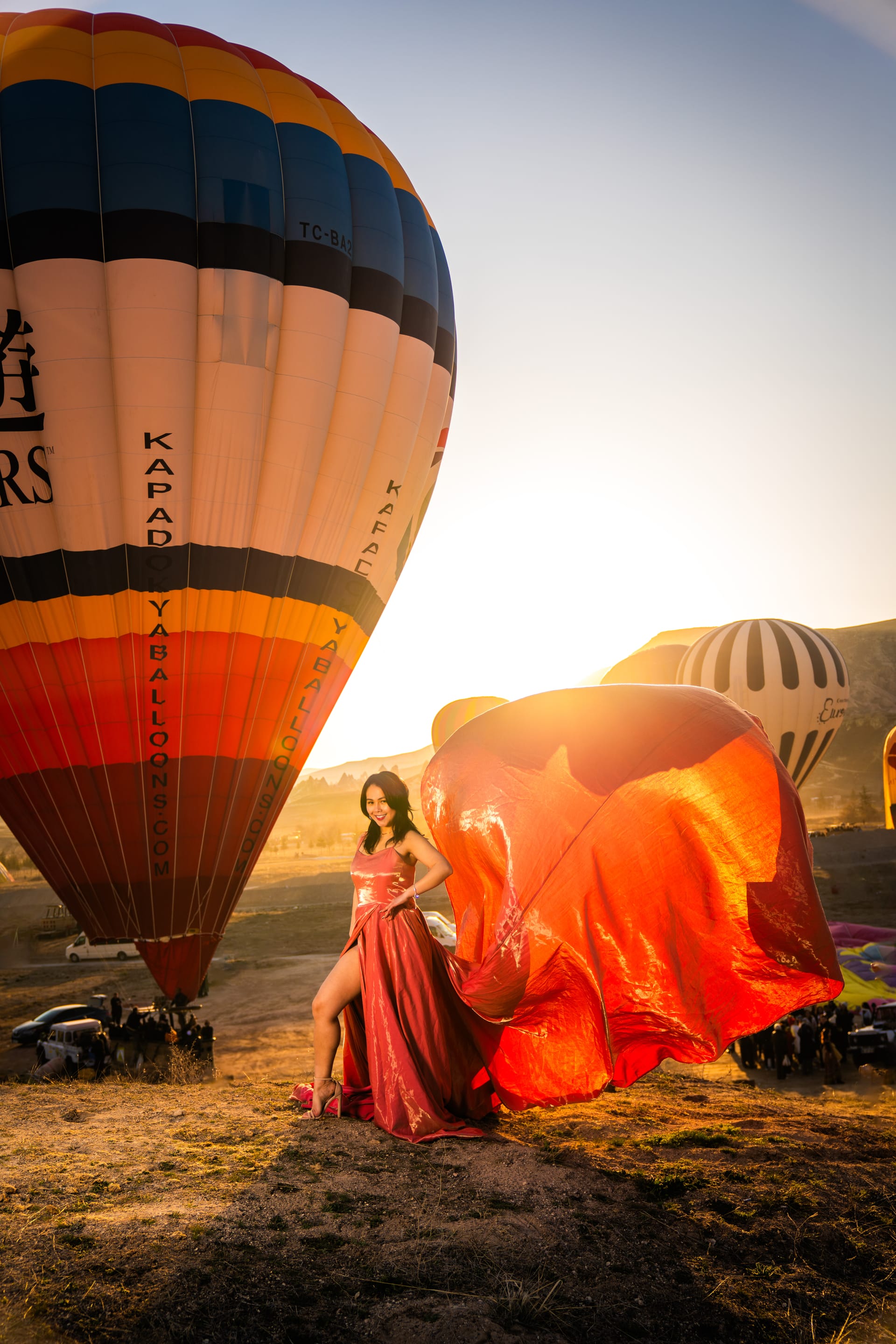
Studio lights are controllable, predictable, and safe. But every frame we capture in Cappadocia is shaped by the light nature offers us. Natural light is our most valuable tool — and working with it means learning its language. In this article, we share the approaches we have developed over the years and how we turn Cappadocia's unique lighting conditions into an advantage.
Golden Hour: The Morning and Evening Magic
The term "golden hour" is a well-known concept in photography, but in Cappadocia it takes on a different dimension. The region's volcanic rocks — tuff, basalt, and limestone — reflect sunlight in a unique way. In the first 45 minutes after sunrise, the fairy chimneys take on a warm amber tone as if they were glowing from within. This tone cannot be replicated by any filter or post-production technique.
For us, the morning golden hour typically begins 10 minutes before sunrise. During this window, while the sky is still transitioning from blue to purple, the first light on the horizon works perfectly for silhouettes. We position couples at the edge of the valley, leaving the color-gradient sky behind them. Once the sun rises, we change direction — now the light should fall on faces and shadows should be soft.
The evening golden hour carries an entirely different mood. In the final hour before sunset, light arrives horizontally and creates long, dramatic shadows across every surface. Cappadocia's rock formations become a three-dimensional map in this light. We usually reserve this hour for the most emotional frames of our experiences.
Professional tip: Golden hour in Cappadocia lasts roughly 20 minutes less than in Istanbul because the plateau has a clearer horizon line and the sun rises more quickly. Every minute counts — arrive at your shooting location at least 30 minutes early.
Blue Hour and the Hidden Power of Overcast Days
About 30 minutes before sunrise and 30 minutes after sunset, the sky takes on a deep cobalt blue. We call this "blue hour," and it is especially invaluable for dramatic, cinematic portraits. The majority of our balloon sessions begin during this window — while balloons are still being inflated, the orange glow of the burner flame creates a mesmerizing contrast against the blue sky backdrop.
Overcast days are conditions that most couples worry about but that we quietly appreciate. Cloud cover acts like a massive softbox: it distributes light evenly in every direction, eliminates harsh shadows, and renders skin tones with extraordinary softness. Cappadocia's stone textures reveal more detail under cloudy light because bright areas don't blow out and shadows don't get crushed.
The aftermath of rain is a separate treasure altogether. Wet rock surfaces reflect light, color saturation increases, and residual moisture in the air sometimes creates a natural fog effect. Some of our most atmospheric frames were captured in moments that most people would call "bad weather."
Our Technical Approach: Reading the Light
Working with natural light demands constant adaptation. In a studio, you control the light; outdoors, the light guides you. Our technical approach is built on three fundamentals:
First, mapping the light. For every shooting location, we know in advance where the light will come from and where shadows will fall based on the season and time of day. We built this knowledge through years of observation and we continuously update it.
Second, using natural surfaces instead of reflectors. Cappadocia's light-colored tuff rocks act as natural reflectors. When we position a couple near a pale rock wall, the shadow side of their face is automatically filled with light. This produces a far more organic result than an artificial fill light would.
Third, playing with contrast. Sometimes we use the shade beneath a tree to darken the edges of the frame and draw the eye toward the center. Sometimes we shoot directly into the sun — backlighting — to create a natural halo effect around the hair. These are calculated decisions, but the result should always look natural.
Cappadocia's light tells a different story every day. We love listening to that story and carrying it into your frame. Together we can determine which package suits you best based on lighting conditions.
Do you decide the shooting time?
Yes. We recommend the ideal light window based on the season, weather, and the experience you have chosen. We generally work around sunrise or sunset, but we also have locations that yield beautiful results even during midday.
Is the session canceled in cloudy or rainy weather?
No. We only reschedule under conditions that pose safety risks (storms, dense fog, icy conditions). Overcast weather usually improves photographic quality. Visit our blog for more detailed insights.
Do you ever use artificial light?
We use natural light as our primary source, but we add minimal artificial light when needed — for example, a small LED panel for night sessions or lanterns to add warmth to a scene. We never use studio-style lighting that overwhelms the setting.


Your story begins in Cappadocia
We'll craft something timeless—quiet, elegant, and cinematic.
Explore Experiences