
The Editing Process Behind Cappadocia Photos
From raw frame to final result — a look into our photo editing process.

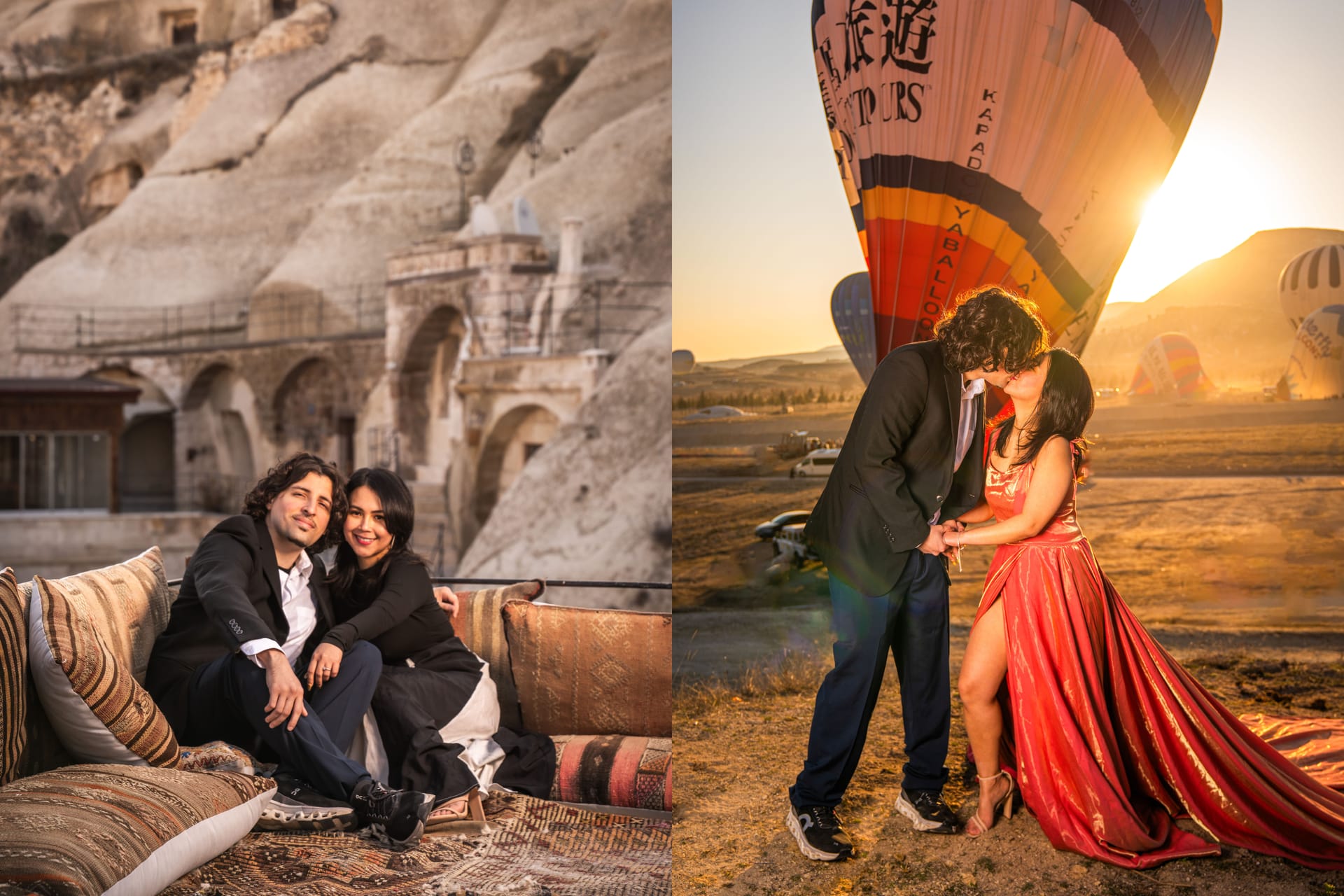
When shooting day ends, only half the work of photography is complete. The remaining half — perhaps the more critical half — takes place at the editing desk. Transforming a raw digital file into a photograph that carries emotion is a process requiring technical mastery as much as artistic vision.
Our clients frequently ask: "What exactly do you do to my photos?" In this article, we transparently share our entire editing process from raw capture to final delivery.
The Selection Process: From Hundreds of Frames to the Best
In a typical shooting session, we capture between 500 and 1,500 frames. This number may seem high, but it is normal in professional photography — multiple versions of the same moment, different angles, and the capture of natural expressions account for this count.
The first step is preliminary culling. Technically insufficient frames — focus issues, poor framing, blink moments — are quickly eliminated. At this stage, typically 40-50 percent of total frames are removed.
The second stage is emotional selection. Among the remaining frames, we choose those that tell the story most powerfully, reflect the emotion best, and are visually most impactful. This selection is entirely subjective and requires an eye developed through years of experience. Knowing which of three different frames from the same second is "the moment" — this is the first and perhaps most important decision of the editing process.
After final selection, we deliver between 100 and 300 edited photographs depending on the package. Each one has received individual attention, positioned as a part of the story.
Color Correction and Tonal Adjustment
The heart of our editing process is color correction. RAW files contain the raw data the camera sees — which is quite different from what the human eye perceives. During color correction, we interpret this raw data to reflect the true atmosphere of that moment.
For Cappadocia shoots, we use a characteristic warm, slightly desaturated tone. This approach enriches nature's earth tones while keeping skin colors natural and healthy. Our aim is not to look "filtered" — it is for the photograph to match the image that comes alive in your mind when you remember that moment.
Light adjustments are also made individually for each photograph. Recovering details in shadow areas, balancing bright regions, and adjusting overall contrast — this fine craftsmanship transforms a flat image into a photograph that feels three-dimensional.
Maintaining a consistent color palette throughout the entire shoot is critically important. A frame taken on a terrace and one taken in a valley, despite being shot under different lighting conditions, should feel like they belong to the same album. This consistency is the most challenging and most important aspect of professional editing.
Our editing philosophy: We do not "change" photographs — we complete them. We adopt an approach that highlights natural beauty, preserves the emotion of the moment, and remains realistic. Excessive retouching or artificial appearance is not our style. Your photographs should look natural and timeless even when you look at them years later.
Retouching and Final Touches
After color correction, subtle retouching is applied to photographs where needed. This includes softening temporary skin blemishes, correcting wrinkles in clothing, or removing distracting elements from the background.
There is an important line here: preserving authenticity. We do not erase wrinkles, alter body shapes, or transform facial features. The details that make you who you are are preserved — only small enhancements are made to present the moment at its best.
In the final stage, photographs are exported in different formats: high-resolution print files and web versions optimized for social media. Both formats are included in the delivery.
Delivery typically takes 5-7 business days. This time is necessary for us to give each photograph the individual attention it deserves. Rushing means compromising quality — and that is something we do not do.
If you have questions about our editing process or would like to start planning a shoot, you can reach us through our contact page. You can see examples from our recent work on our experiences page.
Can I also receive the RAW files?
We deliver edited final files as standard. RAW files are raw data that is impractical to use unless you have your own editing workflow. We can evaluate this upon special request, but our general recommendation is to work with the professionally edited final files.
Do I have a say in how the photos are edited?
Of course. We discuss your color and style preferences before the shoot. After delivery, you have a revision right for minor adjustment requests. Our goal is for you to be completely satisfied with the results.
Are black-and-white versions also created?
Yes. We edit a selected few frames from each shoot in black and white as well. Cappadocia's dramatic textures and light play produce particularly impressive results in black-and-white photography. Additional black-and-white edits can also be made upon request.


Your story begins in Cappadocia
We'll craft something timeless—quiet, elegant, and cinematic.
Explore Experiences