
A Day in the Life of a Cappadocia Photographer
From sunrise to night shoots — a typical day of a Cappadocia photographer.

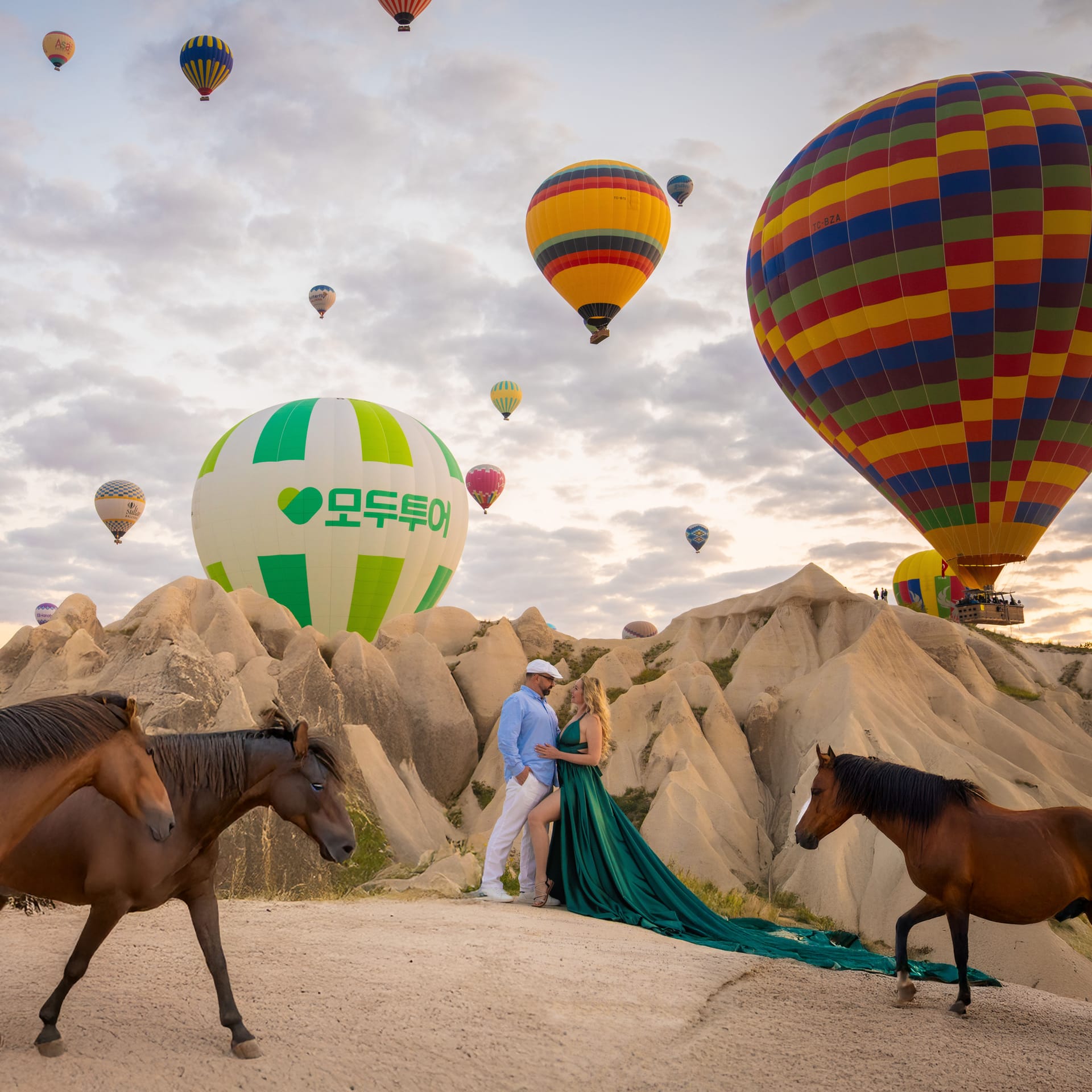
4:15 AM. The alarm rings. Outside it is still dark, the air is cool, and Cappadocia's valleys are wrapped in silence. For most people, this is the middle of the night. But for a Cappadocia photographer, the day has already begun.
In this article, we share a typical shooting day for our team — from pre-dawn darkness to late-night editing — in all its reality. We do not want to romanticize this profession, but to show the effort and passion behind it.
Before Dawn: Preparation and Travel
We leave home approximately one hour before sunrise. The equipment bag was prepared the night before: camera bodies, lens kit, spare batteries, memory cards, gimbal, reflector, and seasonal accessories. On cold winter mornings, we carry equipment close to body heat in the car — cold metal and lens fog directly affect shooting quality.
When we arrive at the location, the first task is to read the light. The color of the sky, cloud cover, density of the mist — these determine that day's shooting strategy. Every morning is different, and for an experienced photographer, this uncertainty is not a threat but an opportunity.
We typically meet our clients 20-30 minutes before sunrise. While they sip their coffee on the terrace, we have already taken test shots and determined the best angles. This preparation ensures we make efficient use of every second once the shoot begins.
Golden Hour and the Shooting Flow
With sunrise comes the golden hour, and this is the most intense 40-50 minutes of the day. Balloons launch, light changes rapidly, and every second offers a different tone and atmosphere. During this time, as photographers, we are simultaneously managing technical settings and communicating with the client.
After the terrace shoot is completed, we usually move to a second location — a valley, a historic street, or rock formations. While the morning light is still soft and warm, these transitional scenes add variety and depth. Sometimes a third location is added to the schedule.
The morning session typically wraps up around 8-9 AM. After seeing our clients off, a brief breakfast break follows — and if there is a second session, preparation begins. On busy days, we conduct two separate shoots: morning and evening.
An insider note: The most rewarding moment of this profession is the client's reaction when they see their first frames. The question "Is that really me?" makes you forget all the early mornings and heavy equipment carried. That moment is why we do this.
Sunset and Night: The Second Half
Afternoons are generally dedicated to editing work. Files from the morning shoot are transferred, backed up, and pre-selected. This process requires quiet, focused work — choosing the strongest frames from hundreds of captures is an expertise in itself.
On days with a sunset shoot, we head back to location around 4-5 PM. Sunset light carries a different character from the morning — warmer, more dramatic, and longer lasting. These hours are magnificent for silhouette shots and wide landscape frames in particular.
By the time we return home in the evening, it is usually past 8 PM. Equipment is cleaned, batteries charged, and the next day's plan reviewed. Editing work continues — sometimes until midnight.
This pace continues through most of the year. But every day in Cappadocia offers a new light, a new story, and a new perspective. We have been doing this for years and still feel the same wonder every morning when we look out the window.
When browsing our experiences, know that this effort stands behind every single frame. You can find more articles about our team's working process on our blog.
Does the shoot get cancelled if the weather is bad?
In most cases, no. Cloudy days offer soft, even light — which is actually ideal for portrait photography. We only postpone shoots in cases of heavy rain or storms, and in those situations, an alternative day is arranged.
How many hours do you work on a shooting day?
A typical shooting day includes 4-5 hours of active shooting and 3-4 hours of preparation and editing work. On full-day shoots, this extends further. Days lasting 12-14 hours total are common.
What is your favorite time to shoot?
Most of our team prefers sunrise. That first light — before the world has woken, when the valleys are veiled in mist and the sky turns pink — is the most special time both technically and emotionally.


Your story begins in Cappadocia
We'll craft something timeless—quiet, elegant, and cinematic.
Explore Experiences