
Civil Ceremony in Cappadocia: What to Know
Planning a legal ceremony in Turkey requires specific paperwork. We walk you through the process step by step.

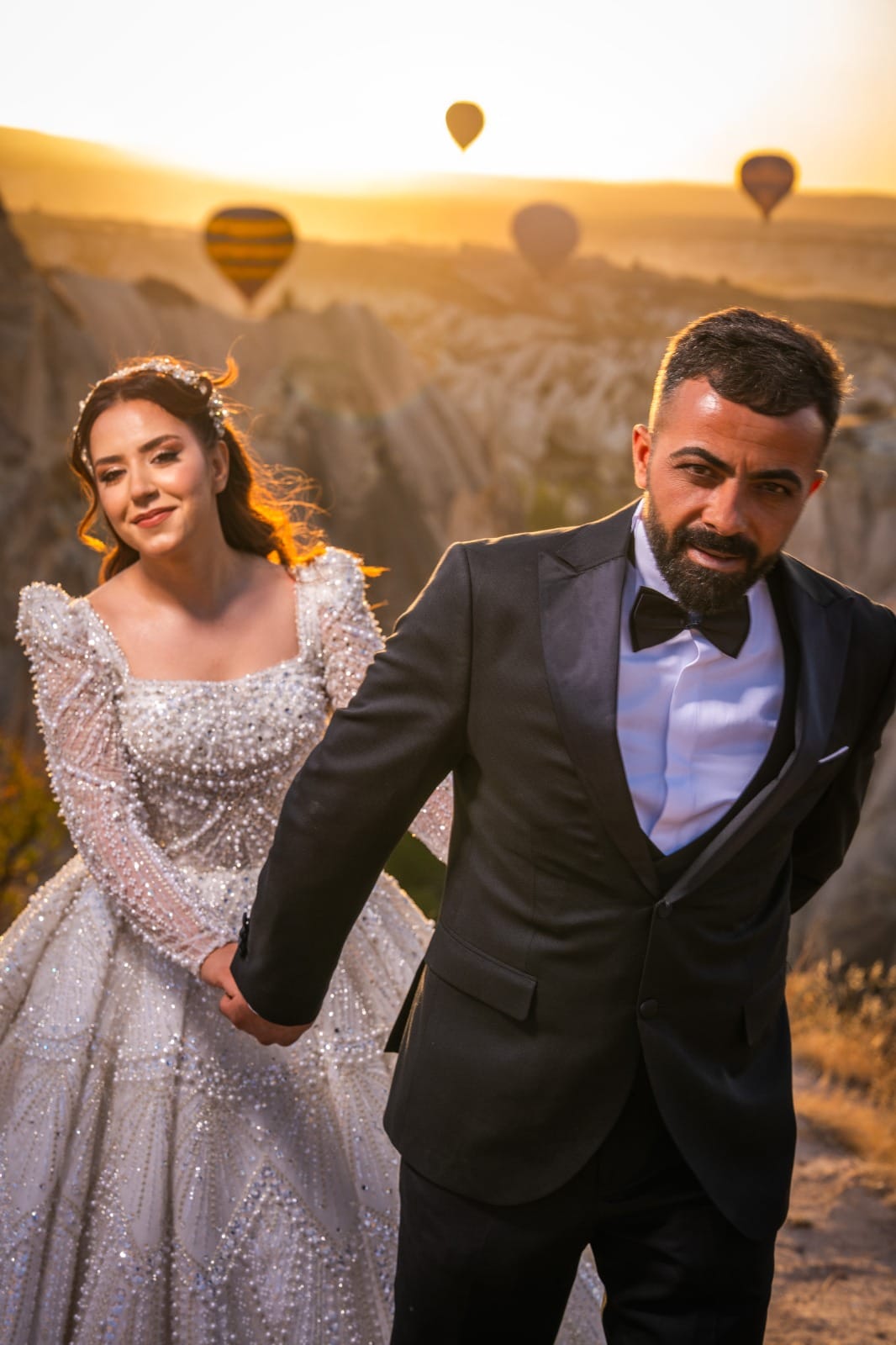
Getting legally married in Cappadocia is entirely possible — for both Turkish nationals and foreign couples. The process does involve a few steps depending on your nationality, but think of it less as a bureaucratic maze and more as a checklist that can realistically be completed within a week with the right preparation.
We've put this guide together for couples coming from both Turkey and abroad. From common questions to practical details, here's what you need to know about having a legal ceremony in Cappadocia.
The Legal Framework
In Turkey, the only legally binding form of marriage is a civil ceremony performed by an official registrar (nikah memuru) appointed by the municipality. Religious ceremonies alone have no legal standing — if you want a religious element, you must complete the civil ceremony first.
The ceremony is conducted by the municipality where the wedding takes place. In the Cappadocia region, the municipalities of Göreme (Nevşehir), Ürgüp, Uçhisar, and Avanos are authorised to perform civil marriages.
Important: The civil registrar is an official municipal representative. Regardless of where the ceremony is held — hotel, terrace, open-air location — it follows official legal procedures. You can invite the registrar to your preferred venue; this is arranged through coordination with the municipality.
Process for Turkish Citizens
For Turkish nationals, the process is relatively straightforward.
Required Documents
National ID card (for both parties). Civil registry extract (available through the e-Devlet government portal). Marriage eligibility certificate — obtained from the civil registry office, confirming single status and no legal impediments. Health report — from a family physician, including specific blood tests. Four passport-sized photographs (for each party).
Timeline
Document preparation typically takes 3-5 business days. Once everything is in order, you submit your application to the municipality and book a ceremony date. Municipalities generally schedule ceremonies 1-2 weeks after application. During busy periods (summer months, special dates), we'd suggest applying earlier.
Two witnesses are mandatory. Witnesses don't need to be Turkish citizens but must present valid identification.
Process for Foreign Nationals
Foreign nationals can legally marry in Turkey. The process involves a few additional steps.
Required Documents
Passport (valid for at least 6 months). Birth certificate — with apostille or consulate legalisation. Certificate of No Impediment (CNI) — issued by authorities in your home country, confirming there's no legal barrier to your marriage. This must carry an apostille. Health report — can be obtained from a hospital in Turkey. Four passport-sized photographs (for each party).
All documents in foreign languages must be accompanied by sworn Turkish translations and notarised. This translation can be done in Turkey and usually takes 1-2 business days.

Country-Specific Considerations
Citizens of countries that are party to the Apostille Convention can use apostille certification. For non-member countries, consular legalisation is required instead. Because specifics vary by country, we'd strongly recommend contacting your country's embassy or consulate in Turkey before starting the application.
Some countries — notably the US, UK, and Germany — require that marriages abroad also go through a notification or registration process under their own legal framework. Research what's needed for your home country to recognise a marriage performed in Turkey.
Tip: We'd recommend that foreign couples start the document process at least 4-6 weeks before their ceremony date. Apostille and translation timelines vary by country, and leaving this to the last minute creates unnecessary stress. You're welcome to ask us about this during your planning — we work with local advisors who know the process well.
Mixed-Nationality Couples
This scenario is quite common. The process involves the foreign partner completing the document requirements above while the Turkish partner prepares their own paperwork. The key thing to note: all documents from the foreign partner must be in sworn Turkish translation and officially certified.
The ceremony language is Turkish. If either partner doesn't speak Turkish, a sworn interpreter is legally required to be present. The interpreter officially translates the registrar's questions and the couple's responses. It adds a bit of time to the ceremony but runs smoothly.
Venue Options for Civil Ceremonies
The ceremony can take place at the municipal marriage hall, but you're not limited to that. Inviting the registrar to your chosen location is possible — and it's one of the best things about getting married in Cappadocia.
Municipal marriage hall — The most practical and economical option. The halls in Göreme and Ürgüp are small but well-maintained. Perfectly adequate for an intimate ceremony.
Cave hotel terrace — The most popular choice among our couples. The registrar comes to the hotel, and the official ceremony takes place on the terrace. Views, atmosphere, and comfort all in one. Most hotels with wedding experience have a coordinator who handles the municipality coordination.
Open-air locations — With municipal permission, it's possible to hold the ceremony at a valley viewpoint or panoramic location. This requires advance coordination and permits from the municipality.
Regardless of venue, the registrar follows the same official procedure: identity verification, witness check, vows, and signing of the marriage register.
Our best wedding venues guide covers venue options in detail for both ceremonies and celebrations.
Practical Venue Considerations
Having the registrar come to an external location is straightforward, but a few practical details are worth noting.
Access: The registrar arrives in formal attire. Locations requiring a valley hike may not be suitable. Terraces and flat-ground venues are the smoothest option.
Furniture: Signing the marriage register requires a flat surface. For outdoor locations, a small table and chairs need to be arranged in advance. Hotels already have this covered.
Noise: The registrar speaks and asks questions during the ceremony. Very windy or crowded spots can make this difficult. Semi-private or fully private venues are preferable.
Scheduling: The registrar typically allocates a specific time slot. Staying on schedule matters — delays can affect subsequent appointments. We build the timeline around this.
The legal process may sound complicated, but with the right guidance it can be handled within a week.
What the Ceremony Day Looks Like
A typical civil ceremony day in Cappadocia flows like this:
Preparation (2-3 hours before): Our hair and makeup team prepares you at your hotel. Meanwhile, we set up at the ceremony location and check the light.
Pre-ceremony shoot (1-1.5 hours before): Portrait session before the ceremony. This serves a double purpose — capturing beautiful frames and helping you shake off ceremony nerves. For sunset ceremonies, we start during golden hour.
The ceremony (15-30 minutes): The registrar arrives, conducts the official procedure. Identity check, witness verification, vows, signatures. We photograph throughout — both the formal moments and the emotional reactions.
Post-ceremony session (30-60 minutes): Once the ceremony excitement settles, a more relaxed, spontaneous shoot. Valley walk, sunset frames, celebration moments.
What Happens During the Ceremony
Knowing the flow of the official ceremony helps reduce stress and makes photography planning easier.
When the registrar arrives, the first step is identity verification. Have your passport or ID ready. Then the witnesses' identifications are checked.
The registrar opens with a brief address — a few words about the meaning and responsibilities of marriage. This is in Turkish; if an interpreter is present, it's translated. Each partner is then asked individually: "Do you accept this person as your spouse?" With "yes" from both parties, the marriage is officially performed.
The marriage register is signed — first by the couple, then by the witnesses. This is a particularly valuable moment from a photography perspective. The act of signing, the exchange of glances, that first "married" smile — these are among the most genuine and emotional frames we capture.
Finally, the registrar presents the marriage booklet to the couple. This document is the legal proof of your marriage and should be kept safe.
The entire process usually takes 15-20 minutes. With an interpreter, it extends to 25-30 minutes. Brief but emotional — and photographically rich.
Combining With a Celebration
Many couples pair the civil ceremony with a celebration dinner. Daytime ceremony, evening dinner at a restaurant or hotel — this combination works beautifully.

Timing and Planning
When to apply: For Turkish nationals, 2-4 weeks ahead is sufficient. For foreign couples, starting the document process 6-8 weeks in advance is the safe approach.
Which days are available? Municipalities operate on weekdays. Weekend ceremonies may incur additional fees. Saturday is the busiest day; Sunday isn't available at all municipalities. Plan early.
Ceremony time: Depends on the municipality. Usually between 09:00-17:00. If you want a sunset ceremony (the best option for photography), you'll need to discuss this with the municipality in advance — not all accept out-of-hours ceremonies.
Season: Legal ceremonies happen year-round. For photography, April through June and September through November are optimal. But winter wedding options exist too — a ceremony against a snow-covered landscape is remarkably powerful.
Symbolic Ceremony vs. Legal Ceremony
An important distinction: some couples choose to hold only a symbolic ceremony in Cappadocia and complete the legal marriage in their home country. This is a perfectly valid approach and eliminates the entire document process.
A symbolic ceremony looks and feels exactly like a wedding — vows, ring exchange, an officiant — but carries no legal weight. We cover this option in detail in our elopement guide.
The choice is entirely yours. We photograph both formats with the same care and quality — legal or symbolic, the emotion in the pictures is the same.
A Note on Costs
Precise figures are difficult because costs depend on variables: municipality fees, interpreter, venue, florals, music, private transfer. But as a rough framework:
Municipal ceremony fee — quite reasonable, with small variations between municipalities. Sworn interpreter (for non-Turkish-speaking couples) — an additional cost to factor in. Document translation and notarisation — varies by number of documents. Registrar travel to external venue — an additional fee may apply.
Photography, hair and makeup, florals, and other services are separate. Our wedding photography packages cover the photography side in detail.
Note: The most commonly overlooked budget item is the interpreter fee. If either partner doesn't speak Turkish, we'd recommend factoring this in from the start.
Cappadocia as a Destination Wedding Location
Cappadocia is becoming an increasingly popular destination wedding choice. Small-scale, intimate, set within nature — a structure that doesn't require large-scale event coordination. The legal process is the same as in any Turkish city, but Cappadocia's advantage lies in venue variety and atmosphere.
For the full picture on destination wedding planning, our planning tips guide covers everything from A to Z. For getting to Cappadocia, accommodation, and logistics, our travel guide will be helpful.
If you'd like to incorporate Turkish wedding traditions into your ceremony, our Turkish wedding traditions piece may give you some ideas.
Will a marriage performed in Turkey be recognised in my home country?
Generally yes — marriages legally conducted in Turkey are recognised by most countries. However, each country has its own registration or notification requirements. We'd recommend contacting your consulate before the ceremony to confirm the steps needed.
Do I need to speak Turkish for the ceremony?
No. If either partner doesn't speak Turkish, a sworn interpreter is legally required to be present. The interpreter handles communication between you and the registrar. We work with reliable interpreters and can coordinate this for you.
Do I have to bring my own witnesses?
Two witnesses are mandatory, but they don't need to be people you know. If no one from your circle is available, hotel staff or members of our team can serve as witnesses. This is very common practice for destination weddings.
Can we have the legal ceremony and a celebration dinner on the same day?
Yes, and it's a popular format. Daytime ceremony, evening celebration — the flow works very well. We'll plan the timeline together so that photography light, ceremony timing, and dinner all fit comfortably.
How many days before the ceremony should I arrive in Cappadocia?
If your documents are ready in advance, arriving on the ceremony day itself is enough. But if there are steps that need to be completed locally (such as the health report), coming 2-3 business days early is wise. For a holiday-plus-wedding combination, 4-5 days is ideal.
Can the registrar speak English?
Rarely. The official ceremony language is Turkish. The sworn interpreter exists for exactly this reason — the registrar asks in Turkish, the interpreter translates into your language. The process runs smoothly, and there's really no need to worry.
Explore Related Experiences

Your story begins in Cappadocia
We'll craft something timeless—quiet, elegant, and cinematic.
Explore Experiences