
Best Photo Locations in Cappadocia: A Photographer's Atlas
From valleys to castle viewpoints, fairy chimney forests to Avanos pottery workshops and Ihlara Canyon — a photographer's atlas of Cappadocia's best locations, drawn from 8 years in the field. Every season, every light condition covered.

When you arrive in Cappadocia for the first time, the landscape does the work. Every corner turned reveals something new — a valley you didn't see coming, a rock formation that looks like it belongs in a different century, a terrace that opens suddenly onto the whole plateau. But experience quickly teaches you something: a beautiful place is not automatically a good photography location. The direction of the light, the depth of the background, the texture of the ground, the proximity of other visitors — all of it shapes what a place can actually deliver on camera.
This atlas is drawn from eight years of working Cappadocia's locations across every season, every hour, and every weather condition. The information here doesn't come from brochures — it comes from hundreds of sessions. Browse our experience collection to see which sessions we shoot at which locations, and how the same terrain looks at different times of year.
Sunrise Locations
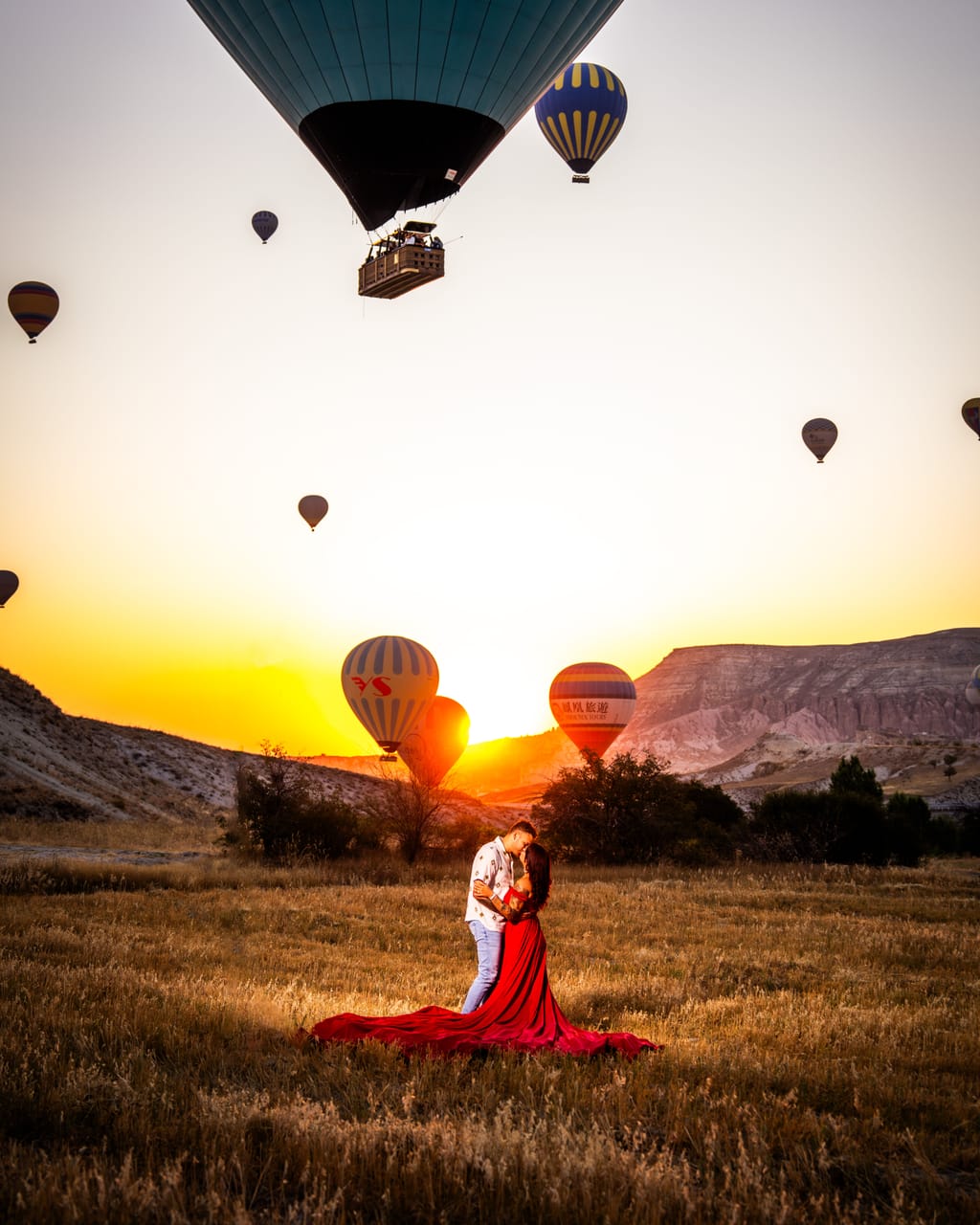
Sunrise in Cappadocia isn't a light change — it's a transformation. The sky moves from deep indigo to cobalt, then opens into pink and gold, all while hundreds of balloons rise silently from the valley floor below. Positioning matters enormously.
Göreme Panorama Viewpoint
One of Cappadocia's most iconic sunrise positions. Situated directly above Göreme, this terrace sits in line with the primary balloon launch zone — which means balloons rise in front of you and across the whole panoramic width of your frame. As light comes from the east, the valleys below fill with a warm diffused softness before the harder light arrives. Come early; this spot draws photographers and visitors. Full guide: Göreme Panorama sunrise spot.
Love Valley Edge
Position yourself at the upper rim of Love Valley and the composition writes itself: fairy chimneys in the foreground, a fleet of balloons in the middle distance, and the sky above doing something different every 90 seconds. The first light hits the fairy chimneys at a low angle and turns them orange-pink — a brief window, but extraordinary. We explore the best positions in our Love Valley secret viewpoints guide.
Kılıçlar Valley Ridge
Less frequented than Göreme or Love Valley, but photographically strong — particularly for those who want a quieter sunrise without sacrificing the balloon backdrop. The eastern rock ridges catch soft directional light at dawn and create a foreground texture that adds depth to wide compositions. Unlike the crowded Göreme valleys, Kılıçlar still carries an undiscovered silence — couples feel completely at ease, experiencing the peace of being together within nature rather than performing for a camera. The wide valley opening is also ideal for drone photography, placing subjects at the heart of an immense panoramic vista. In spring, wildflowers colour the valley floor; in autumn, golden leaves contrast against stone formations; in winter, a gentle mist lends the valley an air of mystery.
Sunset Spots
Cappadocia's sunset light behaves unlike anywhere else we know. The tuff rock — a soft volcanic stone that makes up the fairy chimneys and valley walls — absorbs the day's last light and seems to glow from within. It's not just orange; it's almost luminous.
Red Valley
The essential sunset location in Cappadocia. The valley's reddish-orange tuff formations amplify the golden hour light to a degree that can seem almost implausible on camera. Viewpoints from the valley rim, rock outcroppings mid-path, and positions deep inside the valley all offer different compositions. This is the location we return to most often with couples and solo travelers alike. Full guide: Red Valley sunset photography.
Kızılçukur Valley
Adjacent to Red Valley but with a narrower, deeper profile. The magic comes from the iron oxide content in the rocks — the low-angle light of sunset activates these minerals, and the valley transforms from golden to fiery crimson within minutes. This natural colour show lasts about 30 minutes, and every evening is unique: the position of clouds, the season, and atmospheric humidity rewrite the palette each time. We recommend positioning about 45 minutes before sunset — beginning with portrait frames in soft light, then transitioning to wide landscape compositions as colour peaks, and finishing with silhouette shots during the final deep crimson minutes. Summer sunsets shift to later hours and intensify the colours; winter sunsets are shorter but crisper; autumn is the most balanced season for both colour richness and mild conditions.
Uchisar Castle Area
The highest natural point in Cappadocia, Uchisar works for both sunrise and sunset — but at dusk, the castle silhouette against a warm sky and the village texture beneath it create a particularly strong frame. The castle itself becomes part of the composition rather than just a viewing platform. Full breakdown: Uchisar Castle photo spots.
Valley Photography
Cappadocia's real visual power reveals itself from inside the valleys, not above them. The play of light as it enters from one side of a narrow canyon, the way shadows fall on curved rock walls, the scale shift when you're standing beside a fairy chimney rather than looking at it from a distance — these are the moments that elevate a photograph from documentary to something else entirely.
Pigeon Valley
The carved pigeon houses that give this valley its name add a uniquely human layer to an otherwise geological landscape. The holes and niches in the rock, the old fresco traces, the winding paths — Pigeon Valley rewards slow movement. Morning light enters from the east and creates beautiful directional illumination across the carved surfaces. Explore: Pigeon Valley hidden gems.
Rose Valley
Pink and red rock in combination, catching early morning light with exceptional softness. Arrive 30 minutes before sunrise to catch the colour shift — the stones first appear grey and cool, then the east-facing surfaces turn pink within minutes, as though warming from within. This transition lasts no more than fifteen minutes, making early arrival essential. The valley's narrow structure creates a natural studio effect: the walls reflect and diffuse the light, preventing harsh shadows — ideal conditions for portrait photography. The colour palette of pink, coral, gold, and lavender exists here in natural combination. Walking routes allow extended sessions as the light evolves around you, which is rare in Cappadocia's more open locations.
Ihlara Valley
A canyon unlike anything else in Cappadocia — carved by the Melendiz River over 16 kilometres, with walls reaching 100 metres deep. As the sun rises, light filters down through the deep canyon walls creating soft, directional illumination ideal for portrait photography — harsh shadows soften, and even at midday the canyon floor remains in pleasant shade. The walking path is lined with poplar trees and climbing vines; small stone bridges crossing the river and moss-covered rocks along the shore form natural framing points that change character with every season. Byzantine churches carved into the canyon walls and ancient frescoes add historical depth: telling a modern love story against thousand-year-old walls is the rare privilege this place offers. The contrast of green water and red stone is most vivid in spring and early autumn.
Castle Viewpoints
Uchisar Castle
The widest panorama available in Cappadocia. From the summit, you can see balloons, multiple valleys, distant rock formations, and on clear days far beyond the immediate plateau. The challenge is making that vastness work compositionally — which is where having a photographer who knows exactly where to stand becomes valuable. Guide: Uchisar Castle photo spots.
Ortahisar Castle
Less visited than Uchisar but equally striking — a towering volcanic rock formation serving as the village's natural fortress. From the castle summit, Cappadocia unfolds in 360 degrees: rows of vineyards, clusters of fairy chimneys, and snow-capped Mount Erciyes on the horizon. At sunrise, the first light paints the castle gold; portraits taken in this brief window gain dramatic depth and grandeur. The castle's north face falls into soft shade in the afternoon, offering ideal portrait conditions. We recommend starting with panoramic shots at the summit, then descending into the village streets — stone-walled houses, wooden doors, vine-covered balconies, narrow cobblestone lanes — to combine two entirely different atmospheres within a single session. Far from tourist crowds, this village carries an intimate, documentary quality that is difficult to find elsewhere in Cappadocia.
Zelve Open Air Museum
One of Cappadocia's most atmospheric locations — abandoned cave dwellings, eroded rock churches, and narrow passages between towering formations create the sense of walking through an ancient city. The dim interior light of cave churches and their stone textures are ideal for dramatic portraits; a figure walking between two rock walls creates a powerful composition. The textures — rough stone, weathered surfaces, natural arches — provide photographic depth that modern locations cannot match. Visit in the early morning or late afternoon: low-angle light reveals every crevice in the stone while midday sun creates overly harsh shadows.
Village Charm
Cappadocia's visual character isn't only geological. The villages — stone walls, carved doors, crumbling facades, fig trees growing from rock crevices — offer a different kind of photographic depth. Portraiture and couple photography in these settings gains texture and context that open landscapes alone can't provide.
Ürgüp Old Town Streets
Ürgüp's old quarter is quieter and more authentic than Göreme. Narrow cobblestone streets wind between restored Ottoman houses, stone archways frame unexpected views, and morning light filters through vine-covered pergolas. The path up to Temenni Hill rises with stone steps and panoramic views; restored Ottoman facades offer warm stone tones and wooden architectural details. Away from tourist crowds, every corner has the feel of a photograph waiting to happen. Early morning — streets still empty, light arriving horizontally, walls taking on a warm golden tone — is the ideal window. In the afternoon, shadows deepen into a more dramatic, high-contrast atmosphere. Both conditions carry their own visual character.
Çavuşin Village
Partly abandoned after erosion risk forced evacuation in the 1960s, this cliff-face village carries an arrested quality that is very difficult to manufacture. Crumbling stone houses, ancient church facades, and empty courtyards create an atmosphere that is both haunting and beautiful. Roman-era church frescoes remain faintly visible on the walls; worn stone staircases carry the footprints of centuries. Natural frames — arched passages, window openings, doorway thresholds — add depth to every shot. The contrast between dark interiors and bright vistas creates striking silhouettes. Late afternoon offers the warmest light. Before 9am, the village is nearly completely empty.
Mustafapaşa (Sinasos)
A small town with a distinct Greek architectural heritage — carved stone mansions, ornate facades, and a quietness that the more tourist-trafficked villages have lost. For those who want something architecturally different from the typical cave aesthetic, Mustafapaşa is a genuine alternative.
Avanos Pottery Village
Avanos is known for its centuries-old pottery tradition. Workshops along the Kızılırmak river are filled with earthy red clay, hand-painted ceramics, and textured surfaces that create rich photographic backdrops. The artisan at the wheel, wet clay taking shape, colour gradients across shelves of finished work — every detail is a composition. The narrow streets along the riverbank catch afternoon light softly, creating a natural studio atmosphere; blue and turquoise painted doors, ivy-covered walls, and cobblestone courtyards add depth and character to every frame. Morning hours are when workshops are most active and the light falls softest. Earthy-toned outfits create a harmonious palette alongside the ceramics; riverside tea gardens are ideal for relaxed, intimate portraits. Avanos adds an authentic, living layer to any Cappadocia session.
Hidden Gems
Monks Valley Fairy Chimneys
Monks Valley (Paşabağ) is home to some of Cappadocia's most dramatic fairy chimney formations — tall, multi-headed pillars of volcanic rock that look like something from another planet. Millions of years of erosion created these unique forms: hard basalt caps protected the softer tuff bodies beneath, forming massive mushroom-shaped pillars, some with three or four heads. The human figure shrinks beside these formations, and this contrast in scale adds a dramatic effect to every photograph. Narrow passages between the chimneys create natural frames; placing a couple between two towering formations gives the composition depth and meaning on its own. In the early morning, long shadows create geometric patterns; at sunset the rocks take on warm orange tones. Named after monks who retreated here, the valley contains small chapels carved inside some formations — lending the place a meditative quality that is felt as well as seen.
Devrent Valley
Frequently overlooked in favour of more famous spots, Devrent is one of Cappadocia's most surreal locations — rock formations that suggest animals, faces, and objects, in a composition that feels staged but is entirely natural. Early morning light opens a brief but powerful window here. Devrent Valley guide.
Paşabağ Fairy Chimneys
Famous for its three-headed formations, Paşabağ becomes crowded during peak hours. But at first light, before the tour buses arrive, this forest of chimneys has an entirely different presence — still, alien, cinematic. Our Paşabağ fairy chimneys guide breaks down the best windows.
Seasonal Location Guide
Every location in Cappadocia reads differently across the seasons. The same valley, the same composition, the same hour — but a completely different photograph.
Spring (April–May)
Valley floors come alive with wildflowers. Green and pink tones soften the mineral sharpness of the rock. Morning mist, common in spring, adds depth and mystery to valley shots. Spring is widely considered Cappadocia's most photogenic season — and it's not close.
Summer (June–August)
Long days, strong light, vivid skies. The challenge is midday harshness — schedule everything for the first two hours after sunrise and the two hours before sunset. Cave hotel interiors and shaded valley corridors work well midday. Summer sunsets are exceptional.
Autumn (September–November)
The most balanced season for photographers. Heat softens, light lengthens, crowds thin. By October, traces of gold and amber appear in the valley vegetation — adding a warm layer to Cappadocia's normally mineral colour palette.
Winter (December–March)
Snow transforms every location. White-covered fairy chimneys against a blue-grey sky, frost on valley floors, near-total solitude. Winter photography in Cappadocia produces images unlike any other season — surreal, quiet, and often completely empty of other people.
Combining Locations: A Full-Day Route
Cappadocia's geography allows multiple locations to be combined in a single well-planned day. A typical full-day route might look like this:
- 05:30 — Göreme Panorama or Love Valley for sunrise and balloon backdrop
- 07:30 — Rose Valley or Pigeon Valley for morning light inside the landscape
- 10:00 — Çavuşin or Ortahisar for village texture and portrait work
- 13:00 — Cave hotel terrace session or indoor atmospheric work
- 17:30 — Red Valley or Kızılçukur for golden hour and sunset
We can plan this route within our Classic Cappadocia experience or one of our full-day packages. All logistics, transfers, and timing are handled by us.
Choosing Locations by Photography Type
Different styles of photography have different location requirements. Matching the right setting to your intended type of shoot makes a meaningful difference in what the photographs can actually achieve.
Couple and Romance Photography
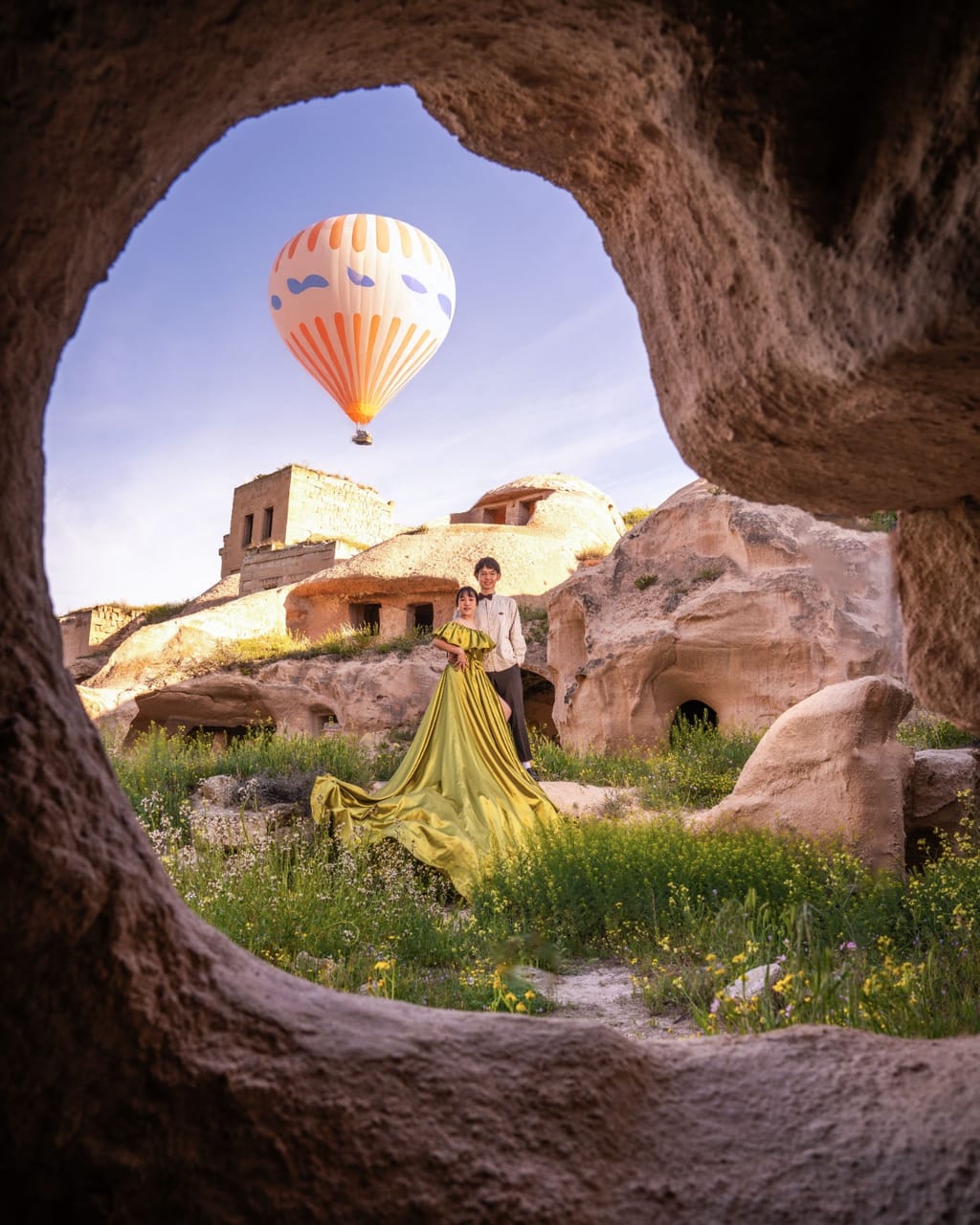
For sessions focused on two people, the location should provide a strong backdrop without overwhelming the subjects. Rose Valley's morning softness, Pigeon Valley's organic texture, or the controlled framing of a cave hotel terrace all work well. Very large open spaces tend to reduce the couple to silhouettes; valley corridors and edge positions keep two people at the centre of the scene.
For elopement and honeymoon sessions, we typically use two or three locations within a single day: balloon panorama at sunrise, valley-interior natural frames in mid-morning, and Red Valley's dramatic backdrop at sunset.
Solo Portraits and Flying Dress
Showing a single figure in dynamic relationship with the surrounding landscape calls for open, expansive settings. Flying dress sessions require consistent wind and sufficient contrast between subject and background. Panoramic viewpoints, castle surroundings, and valley edges are ideal for this format. You can see the locations we typically use in our flying dress sunrise experience.
Balloon Sessions
Positioning for balloon backdrop photography is highly specific. Balloons launch from the Göreme area and drift based on wind direction — which changes daily. This means the best viewing positions shift every morning. A photographer who tracks balloon movement in real time and repositions accordingly is essential for these sessions. Local experience is the decisive factor.
Blue Hour and Evening Sessions
Cappadocia offers strong material for evening and late-light photography. The blue hour — 20 to 30 minutes after sunset — creates a deep indigo sky against which cave hotel silhouettes and fairy chimney ridgelines look almost architectural. Night photography under star-filled skies, particularly in locations away from village light, produces results that are genuinely difficult to achieve anywhere else.
Practical Access Information
Getting between Cappadocia's locations is straightforward, but a few practical details make a meaningful difference to the flow of a shoot day.
Walking Routes
Many valleys are accessible by foot from a vehicle drop-off point, via walking routes of varying length. Red Valley and Rose Valley form a combined 2–3 hour walking route. Pigeon Valley and Love Valley offer connectable routes. For sessions that involve walking, comfortable footwear is essential — heeled or smooth-soled shoes make uneven terrain genuinely difficult.
Vehicle Access
From central Göreme: Uchisar is 5 minutes, Red Valley trailhead is 10–12 minutes, Paşabağ is 15 minutes, Ihlara is 45–50 minutes. Early morning traffic is minimal, making rapid location changes feasible. We coordinate all transfers as part of session planning — share your planned date with us through our contact page and we'll build the logistics into the session plan.
Avoiding Peak Hours
Between 8:00–10:00am and 2:00–5:00pm, tour groups fill the most popular viewpoints. Planning elevated or open positions (Göreme Panorama, Uchisar) for early morning or late evening, and spending mid-morning in valley interiors or less-visited locations, gives you a significantly quieter experience at every spot.
Planning Around Light Conditions
Light is the primary variable in Cappadocia photography. Understanding how it behaves across different times of day allows you to plan sessions that make the most of what the landscape naturally offers.
Golden Hour
The first 45–60 minutes after sunrise and the last 45–60 minutes before sunset. Light comes from a low angle, shadows elongate, and surfaces warm dramatically. The tuff rock in Cappadocia is particularly responsive to this low light — it appears to glow rather than simply reflect, and the effect intensifies as the angle drops further.
Blue Hour
The 30–40 minutes before sunrise and 20–30 minutes after sunset. The sky deepens to a rich indigo while the landscape holds its silhouette. This window is brief but photographically exceptional. At sunrise, balloon burners flashing against the dark blue sky create one of Cappadocia's most distinctive images — dramatic contrast, warmth against cool, scale against intimacy.
Overcast Days
An overcast sky acts as a natural diffuser. Harsh shadows disappear, facial tones render more accurately, and garment colours stay true. Dramatic cloud formations above Cappadocia's rock landscape add atmosphere and scale that a cloudless sky sometimes lacks. An overcast day is not a backup plan — it often produces the most technically consistent photographs of any conditions.
What to Wear at Each Location
Location and wardrobe work together. The right palette choices depend on where you're shooting and at what time of day.
Valley and Sunrise Sessions
Earth tones complement the warm reddish-golden light that defines Cappadocia's valleys at golden hour. Cream, terracotta, camel, and sage green sit naturally in the colour palette of the landscape rather than competing with it. Layers are practical for early mornings, which can be genuinely cold in spring and autumn.
Panoramic and Elevated Locations
At viewpoints with wide skies and distant horizons, contrast matters more. Pale tones against a vivid sky, or a single strong colour note against a neutral landscape, both work well. Wind is usually stronger at elevated positions — flowing fabrics that move naturally in the breeze add dynamism without requiring any deliberate posing.
Village and Architectural Settings
In village streets and cave hotel settings, slightly richer or more structured wardrobe choices can work well. The existing visual complexity — stone textures, carved surfaces, old doorways — supports stronger costume choices that might feel overpowering in a minimal landscape.
Frequently Asked Questions
What is the single best photo location in Cappadocia?
There isn't one — each location offers something different. For balloon sunrise, Göreme Panorama is hard to beat. For sunset glow, Red Valley is the standard. For valley-interior photography, Rose or Pigeon Valley. The right answer depends on what you want to shoot, what time of day, and what season. We help clients make this choice as part of the planning process.
When is the best time of day to shoot in Cappadocia?
Golden hour — sunrise and sunset — should always be the first priority. The blue hour that precedes sunrise is also excellent for mood and atmosphere. Midday is workable in spring and autumn, but in summer the light becomes harsh and contrasty. Overcast days can be unexpectedly good for portraits and valley shooting because the light diffuses evenly.
How far apart are the main locations?
Central locations — Göreme, Uchisar, Red Valley, Pigeon Valley — are typically 5 to 15 minutes apart by car. More distant locations like Ihlara Valley require 45 to 90 minutes. Salt Lake day trips are around 2 hours from Göreme. We coordinate all transfers so clients focus on the experience, not the logistics.
Are there entry fees for photography locations?
Open natural areas — Red Valley, Pigeon Valley, Love Valley — are generally free to enter. Göreme Open Air Museum, Zelve, and the castles require entrance tickets. Private hotel terraces and some cave spaces require prior arrangement. We stay current on access conditions and factor them into session planning.
Which locations are least crowded?
Early morning across the board minimises crowds. Monks Valley, Kılıçlar Valley, and Devrent attract significantly fewer visitors than Göreme or Red Valley at any hour. Çavuşin village is nearly empty before 9am. Part of what we do is choreograph sessions around crowd patterns — being at the right spot before the crowds arrive is a core part of our approach.
How do I choose the right location for my photo session?
The right location depends on the mood you want (dramatic, soft, intimate, grand), the time of day, whether balloons are flying, and the season. Share these details with us when you reach out — we'll build the right route for your session. Contact us here or message us on WhatsApp.
All Location Guides in This Series
Every location listed in this atlas has its own dedicated guide:
- Red Valley Sunset Photography
- Love Valley: Secret Viewpoints Guide
- Pigeon Valley Hidden Gems
- Uchisar Castle Photo Spots
- Göreme Panorama Sunrise Spot
- Paşabağ Fairy Chimneys Guide
- Devrent Valley: The Imagination Spot
- Göreme vs Üchisar: Where for Best Photos?
Want to shoot at these stunning Cappadocia locations? Browse our experience collection and find the session that speaks to you. Explore Experiences — or get in touch and we'll plan the perfect route together.
Explore Related Experiences
Your story begins in Cappadocia
We'll craft something timeless — quiet, elegant, and cinematic.
Explore Experiences